
What Happens to Your Body When You Look at Art
The science behind the calm you feel in a gallery, and why it reaches further than anyone expected.
You have felt it before, even if you never gave it a name. The slowing down that happens in front of a painting. The way a room full of art seems to lower the volume on everything else. For a long time that feeling was treated as something soft and unmeasurable, a nice idea rather than a real effect. That is starting to change. Researchers have begun putting numbers to what happens inside the body when we look at art, and the findings are more striking than most people expect.

The twenty-minute effect
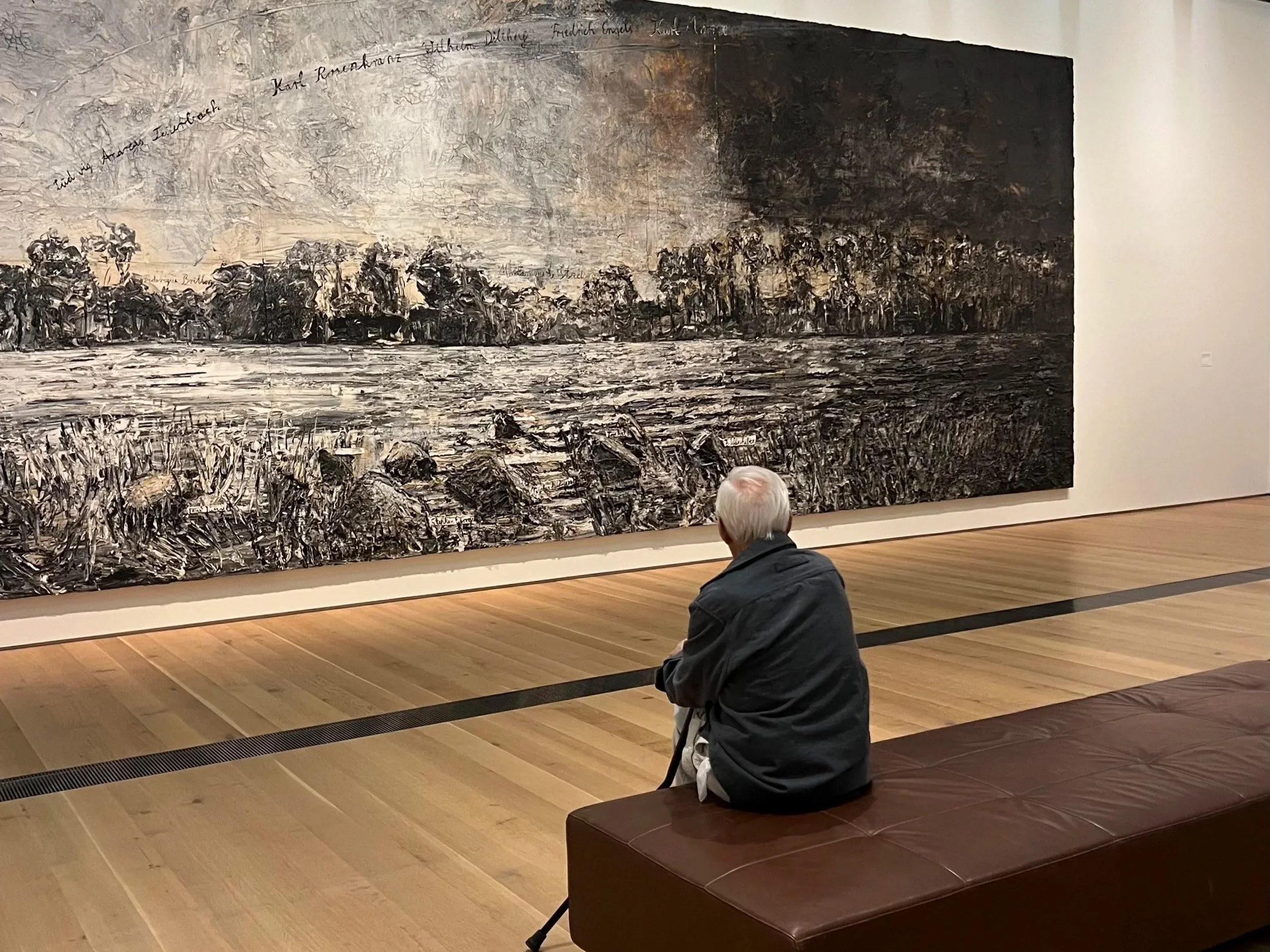
In 2025, researchers at King's College London ran a study that measured the physical response of people looking at art. Fifty adults between the ages of 18 and 40 viewed original paintings by Manet, Van Gogh, and Gauguin at The Courtauld Gallery in London. A second group looked at reproductions of the same works in an ordinary, non-gallery setting. Everyone wore sensors that tracked heart rate and skin temperature, and gave saliva samples before and after their roughly twenty-minute sessions.
The group standing in front of the originals saw their cortisol, the body's main stress hormone, fall by an average of 22 percent. That alone would be notable. What surprised the researchers was how much further it went. Two inflammation markers linked to heart disease, anxiety, and other chronic conditions dropped by roughly a third in the gallery group. The effect reached three systems at once, the immune, hormonal, and nervous systems, all responding together. Art, it turned out, was working on the body the way we usually expect only rest or exercise to.
One honest caveat is worth adding. The study has not yet been through peer review, and fifty people is a small sample. This is early evidence rather than a settled conclusion. But it is the most direct physical measurement of art's effect on the body that we have, and it points somewhere real.
The screen still counts
Here is the part worth slowing down for, because it is easy to misread. The people who looked at reproductions were not left out. Their cortisol fell too, by about 8 percent. Looking at art on a screen lowered their stress. Standing in the room with the original simply raised the ceiling on that effect.
That distinction matters, and not only in a laboratory. Most of us meet art on a screen first. We scroll past it, save it, and sit with it on a smaller scale long before we ever see it in person, if we see it in person at all. The research suggests that this everyday, in-your-hand encounter is already doing something good for you. It is not a lesser version of the real thing so much as the start of it. The screen is where you find the work. The room is where you feel all of it.
Art and the pace of aging
The stress finding sits alongside another, larger piece of research. In 2026, University College London published a study following more than three thousand adults, using blood samples and what scientists call epigenetic clocks to estimate how quickly people were aging at a biological level.
The result was hard to ignore. People who engaged with art at least once a week were, on average, a full year younger biologically than those who rarely did. For comparison, exercising once a week accounted for roughly six months. The benefit was strongest in adults over 40, and it held up even after the researchers accounted for income and other factors. Engaging with art, including visiting exhibitions and galleries, tracked with a slower pace of aging that rivaled physical activity.
A reason to look more closely
Put the two studies together and a simple idea emerges. Looking at art is not only a pleasure or a pastime. It is something your body responds to, measurably, in the direction of calm and of a slower pace of aging.
None of this asks much of you. It does not require training or spending or a degree in art history. It asks only that you look, and that you find work worth looking at. That last part is the real difficulty of it. The feeds are endless and the algorithm is indifferent to your taste. Finding the pieces that actually move you, the ones you would cross a city to stand in front of, is its own small art. That is the part we think about most. Discovery is where all of it begins, and it begins with finding the work that is yours.
Discover more on NALA.
Sources
King's College London, The positive impact of art on the body (2025): https://www.kcl.ac.uk/news/the-positive-impact-of-art-on-the-body
Art Fund, First-of-its-kind study proves positive impact of art on the body (2025): https://www.artfund.org/our-purpose/news/first-of-its-kind-study-proves-positive-impact-of-art-on-the-body
University College London, Engaging with arts linked to slower pace of ageing (2026): https://www.ucl.ac.uk/news/2026/may/engaging-arts-linked-slower-pace-ageing
The Art Newspaper, Arts engagement linked to slower biological aging, study says (2026): https://www.theartnewspaper.com/2026/05/12/arts-engagement-linked-slower-biological-aging-study