
Halloween falls on Saturday and Día de los Muertos begins on Sunday. From medieval dances of death to a pile of sweets in Chicago, this is how artists have kept the dead close, and what it teaches us about paying attention.
Why We Make Art for the Dead
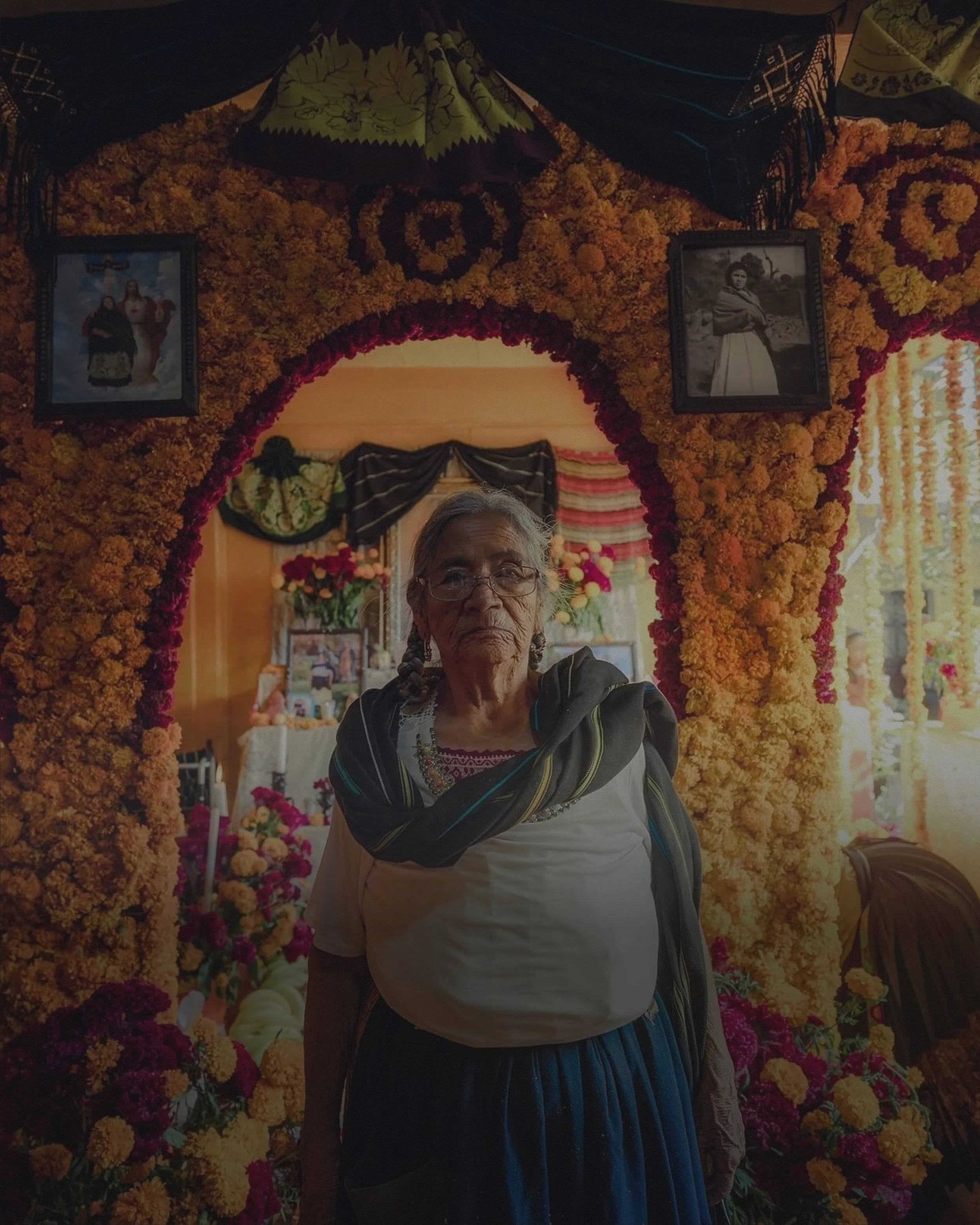
This weekend, two very different traditions arrive one after the other. On Saturday night, much of the world will dress as ghosts and skeletons for Halloween. On Sunday, families across Mexico will begin Día de los Muertos, laying a path of petals and candlelight so that the people they have lost can find their way home.
One is playful, the other tender. But both rest on the same old idea: that for a few nights each year, the distance between the living and the dead grows a little shorter.
Art has been working in that space for centuries. Long before photographs, artists were the ones who kept the dead in view, sometimes to frighten us, sometimes to console us, and sometimes simply to make sure someone was not forgotten. This week, we’re following that thread: from a lost mural in Paris to an altar of marigolds, a pile of sweets in Chicago and an empty chair in New York.
Death Leads the Dance
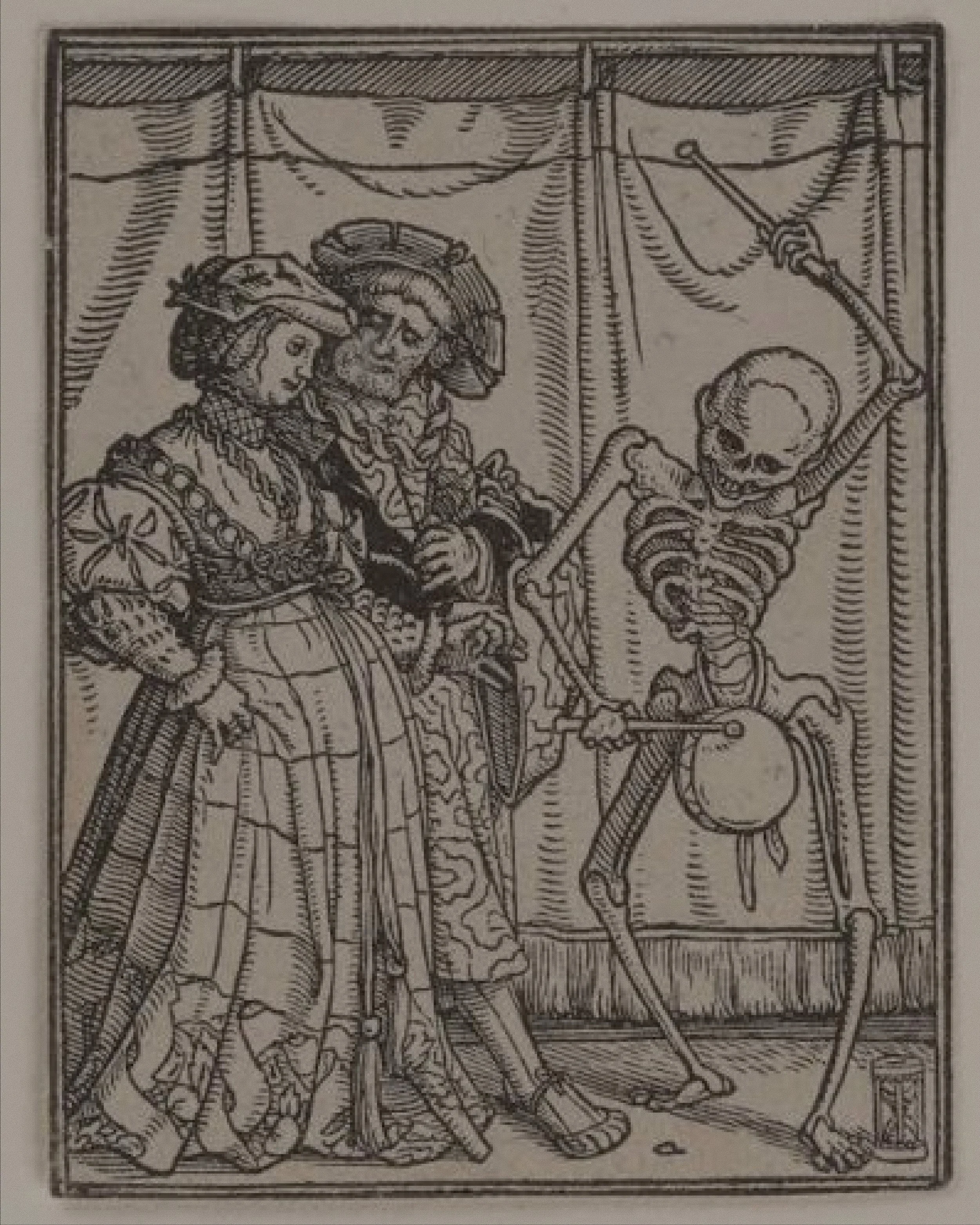
In 1424, on a wall of the Cemetery of the Holy Innocents in Paris, someone painted a procession that would echo across Europe for centuries. Skeletal figures took the living by the hand, one rank at a time: a pope, an emperor, a king, a child, a labourer. Every one of them was led, dancing, towards the grave.
The mural has long since disappeared, but the idea did not. The danse macabre, or Dance of Death, took shape in the shadow of the Black Death, the plague that swept through Europe in the 14th century. Its message was blunt and oddly democratic. Wealth, power and title made no difference. Death came for everyone, and it came for them in the same way.
A century later, Hans Holbein the Younger turned the theme into one of the most influential sets of images of the Renaissance. Working in Basel around 1526, he designed a series of tiny scenes in which Death interrupts ordinary lives: seizing a merchant among his goods, running alongside a ploughman’s horses. When the woodcuts were finally published as a book in Lyon in 1538, there were 41 of them, and Holbein’s name did not appear anywhere.
A Skull Among the Flowers
By the 17th century, the reminder had moved indoors. In the Netherlands, painters perfected the vanitas still life, from the Latin for vanity and transience. At first glance, these are paintings of beautiful things: polished silver, books, musical instruments, flowers at their peak. Look again and the warnings appear. A candle has just gone out. An hourglass is running down. A petal is beginning to brown. And somewhere, often in the centre, sits a skull.
These paintings were not meant to be morbid. They were meant to be useful. In a period of great prosperity, they asked their owners to hold two thoughts at once: enjoy what you have, and remember that none of it lasts. The Latin phrase that sums up the genre, memento mori, means simply “remember that you will die.”
The Audience Is Filming
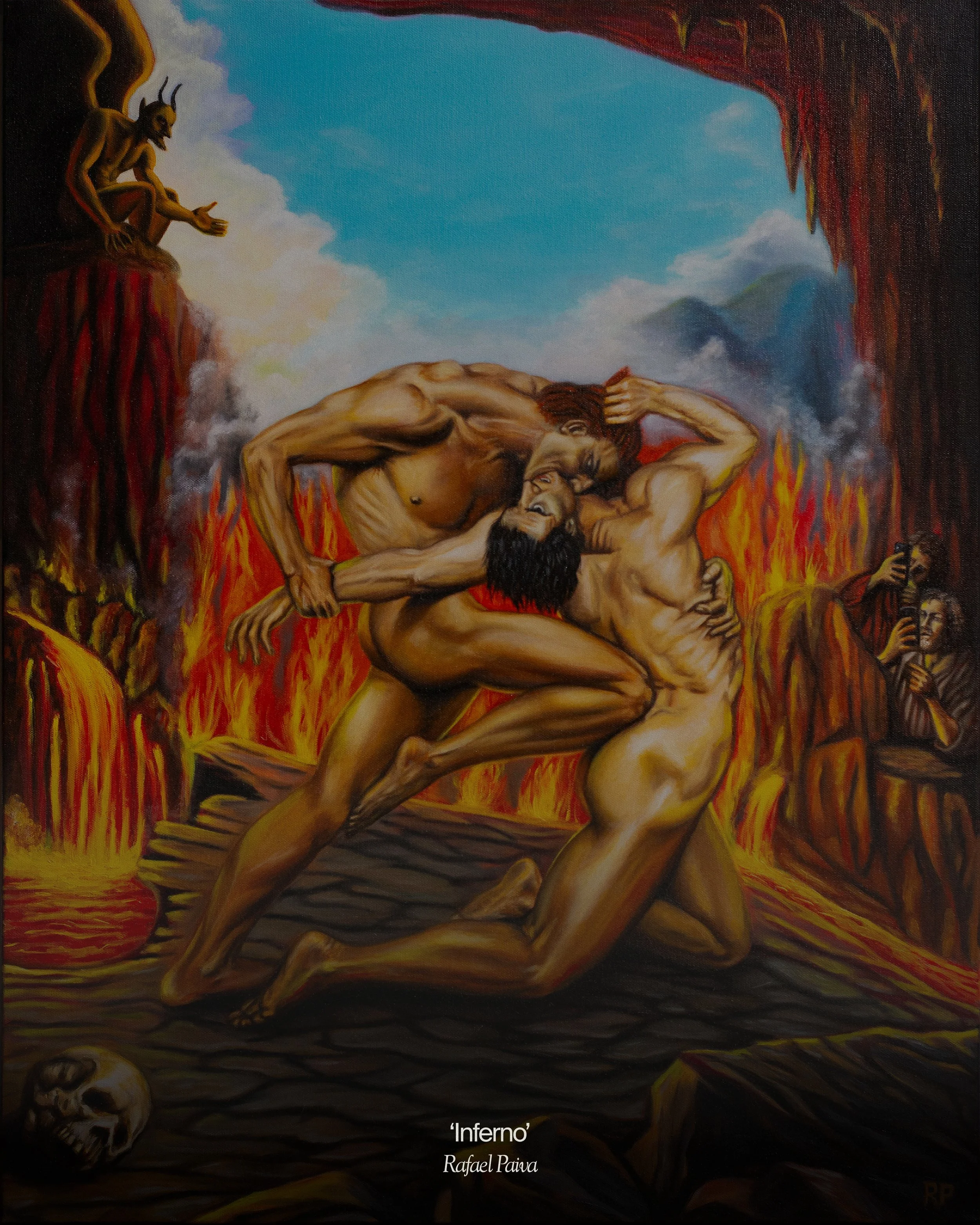
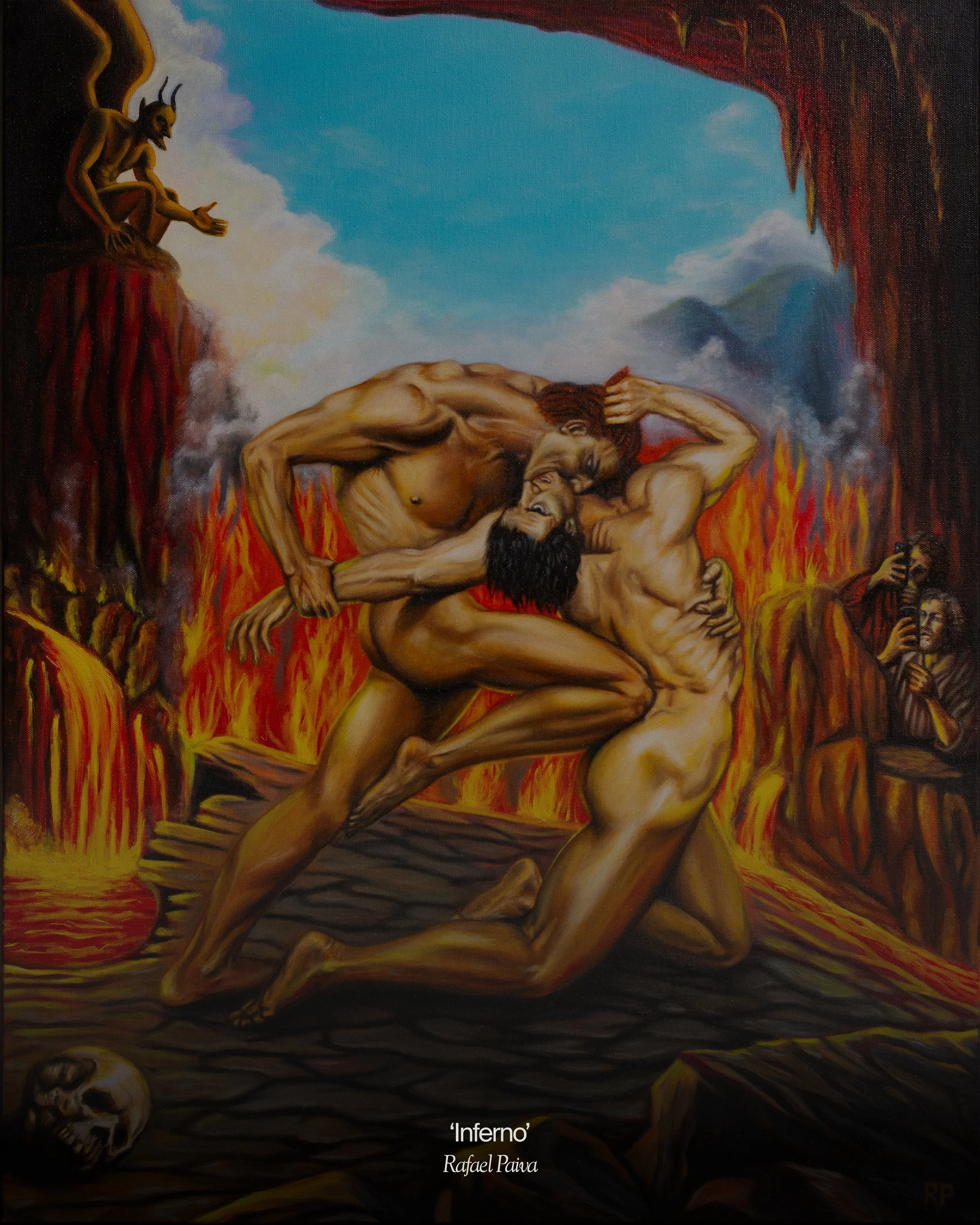
The instinct has never really left us. Artists still paint what frightens us, and the dark still has a way of telling us something about ourselves. On Saturday, we’re sharing Inferno by Rafael Paiva, a painting in which two figures struggle in a landscape of fire while a demon looks on from above.
But look at the corner. A small crowd has gathered, and they are holding up their phones. The medieval Dance of Death asked viewers to see themselves among the dancers. Inferno asks a more modern question: are we taking part, or just recording it?
The Altar as an Artwork
If the Dance of Death was a warning, the ofrenda is an invitation.
Each year, at the turn of October and November, families across Mexico build altars for the people they have lost. UNESCO first recognised the tradition in 2003 and inscribed it on its list of the Intangible Cultural Heritage of Humanity in 2008. The days themselves are carefully divided. In much of Mexico, 1 November is dedicated to children who have died, and 2 November to adults.
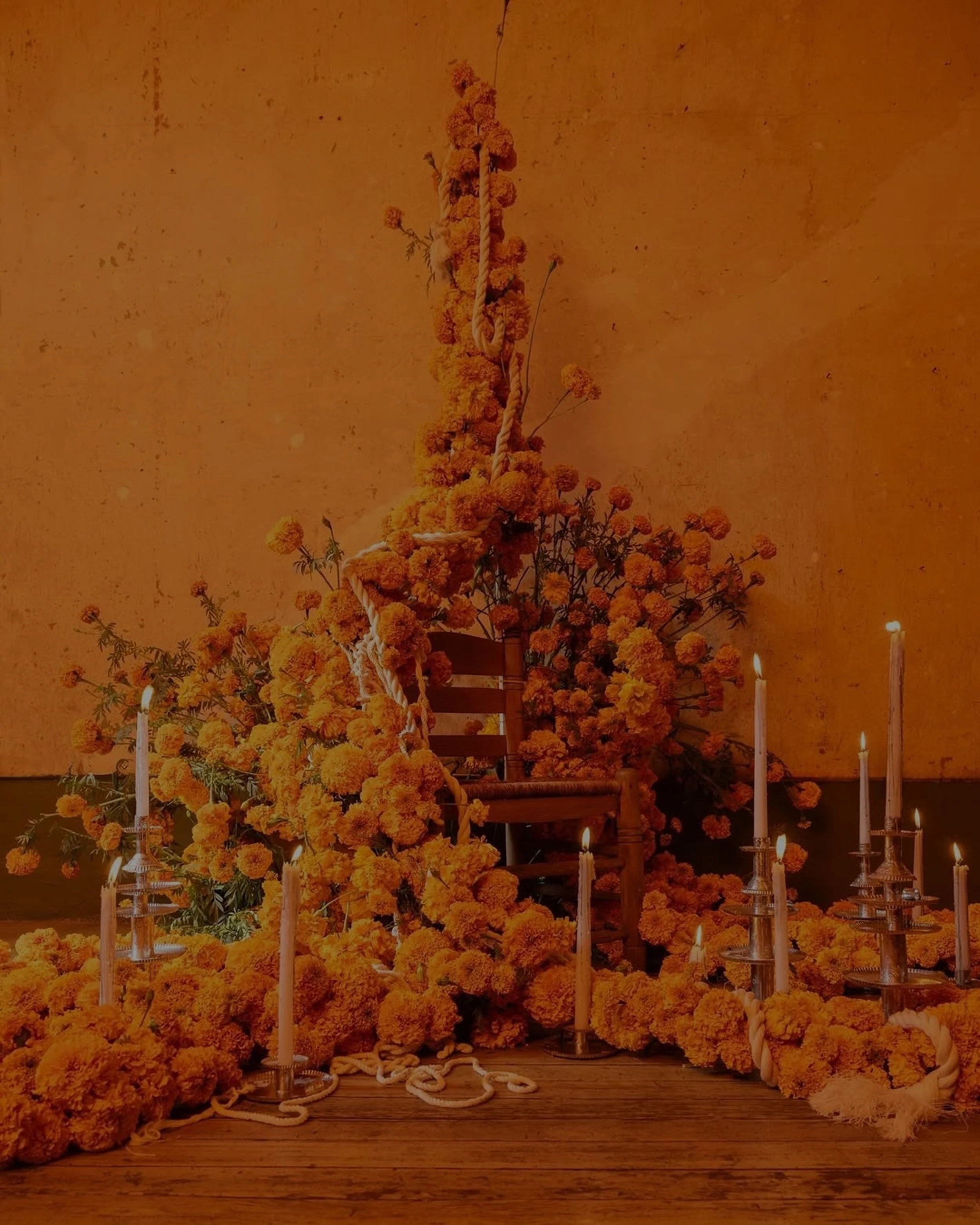
What makes an ofrenda remarkable is that nothing on it is decorative for its own sake. Every element has a job:
Flowers, above all marigolds, are laid in a path from the door to the altar so that souls can find their way.
Candles stand for the family’s dead.
Water quenches the thirst of souls after their long journey.
Salt purifies.
Copal, a resin incense, carries the spirit upwards.
Pan de muerto, the bread of the dead, represents generosity and the gifts of the earth.
Papel picado, delicate cut-paper banners, represents the union between life and death.
And then there are the most personal things: photographs, belongings, and the dishes and drinks the person loved, from tamales to mole.
Seen this way, an ofrenda is a composition in colour, light, scent and objects, assembled with great care for one particular person. It is temporary, collaborative and deeply specific. In other words, it does almost everything we ask of a great work of art.
The Skeleton in the Hat
The festival’s most famous face began as a joke. Around 1910, the printmaker José Guadalupe Posada drew a grinning skull beneath an extravagant, European-style hat. He called her La Calavera Garbancera. The target was social pretension: people who chased fashionable European looks while turning their backs on their own roots. Her message was the Dance of Death’s, delivered with a wink. Under the hat, everyone is the same.
Posada’s image was published as a cheap broadside, the kind sold on street corners. It was only in 1930 that it appeared in a book under the name we know today, La Calavera Catrina. Then, in 1946 and 1947, Diego Rivera painted her into his vast mural Sueño de una Tarde Dominical en la Alameda Central, giving her an elegant gown and a serpent-shaped stole.
A satirical print became a national icon. It is a useful reminder that the images we now think of as timeless often began as something sharp, local and very much of their moment.
A Portrait You Can Take Home
One of the most moving works of art about loss contains no image of the person it remembers at all.
When it is on view at the Art Institute of Chicago, it looks like nothing more than a pile of sweets: hard candies in brightly coloured wrappers, heaped against the wall. Visitors are invited to take one. The work is Félix González-Torres’s “Untitled” (Portrait of Ross in L.A.), made in 1991, the year his partner, Ross Laycock, died of AIDS-related complications.
The pile has an ideal weight of 175 pounds, often linked to Ross’s own body weight. As visitors take a sweet, the pile slowly shrinks, the way a body diminishes through illness. And then it is replenished. The museum’s handlers top it up, on average by 15 to 20 pounds a week, so that the portrait never quite disappears.
What makes the work extraordinary is how much it asks of the viewer. You do not simply look at it. You take part in it, and you leave carrying a small piece of it with you. The portrait survives precisely because it is given away.
It is, in its way, an ofrenda for one person: a careful arrangement of colour and sweetness, made so that someone stays in the room.
The Empty Chair
In 2010, Marina Abramović spent three months sitting at a wooden table in the atrium of the Museum of Modern Art in New York. Opposite her was an empty chair. Visitors could take it for as long as they wished. She did not speak or respond. She simply looked back at them, day after day, for more than 700 hours in total.
The work was called The Artist Is Present. Some visitors sat for a few minutes, others far longer. Nothing happened in the usual sense. And yet the simple experience of being looked at, fully and without interruption, was enough to hold a museum’s attention for three months.
“The performance is really about presence,” Abramović said of the work. “You have to be in the here and now, 100 percent.”
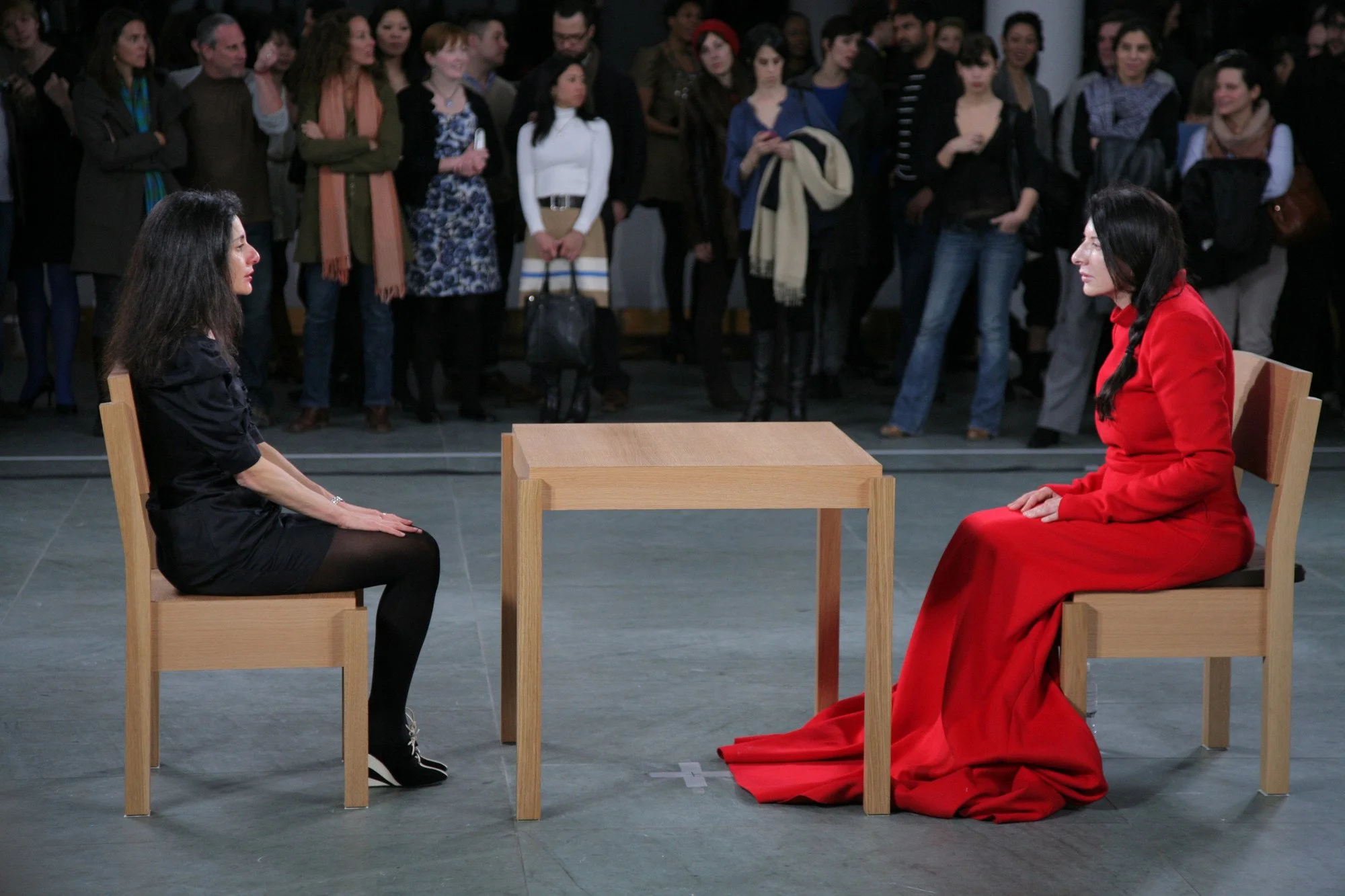
In this week’s Reel, she returns to that idea through a lesson she learned early on: that the moment you start thinking about your next movement, you are no longer fully where you are. It sounds simple. It is extraordinarily hard to do.
It is also, perhaps, what every tradition in this piece has in common. The Dance of Death asks us to remember that our time is limited. The ofrenda asks a family to give its full attention to one person it has lost. González-Torres asks us to carry someone with us. Abramović asks us to stop, sit down and look at the person in front of us.
Each, in its own way, is about presence.
What Do We Really Give Each Other?
It is a question we have been asking all autumn, and it sits at the heart of our next exhibition, GIVE PRESENCE.
The season ahead will be full of things to buy and wrap. But the works in this piece suggest that some of the most valuable things we offer one another cannot be wrapped at all: attention, care, memory, and the simple act of being fully there. A family building an altar. A pile of sweets slowly given away. An artist sitting in silence, looking back at a stranger.
If your own work asks these questions, there is still time. The GIVE PRESENCE open call closes on Sunday 1 November at 10 PM, and it is open to artists worldwide, across disciplines, with no fee to exhibit. https://docs.google.com/forms/d/e/1FAIpQLSe1CptpPVnI3Z7kAMCmUPXHJZZXbhctFz78RynDG3oo4F5BuQ/viewform
And if you would rather see the answers for yourself, join us for the private view at Laundry Studios in London Fields on Thursday 3 December, from 6 to 9 PM, with live art, free workshops and a live auction with The Auction Collective. The exhibition then runs until 25 February 2027.
From the NALA Collection
Three works that sit somewhere between the dark and the remembered.
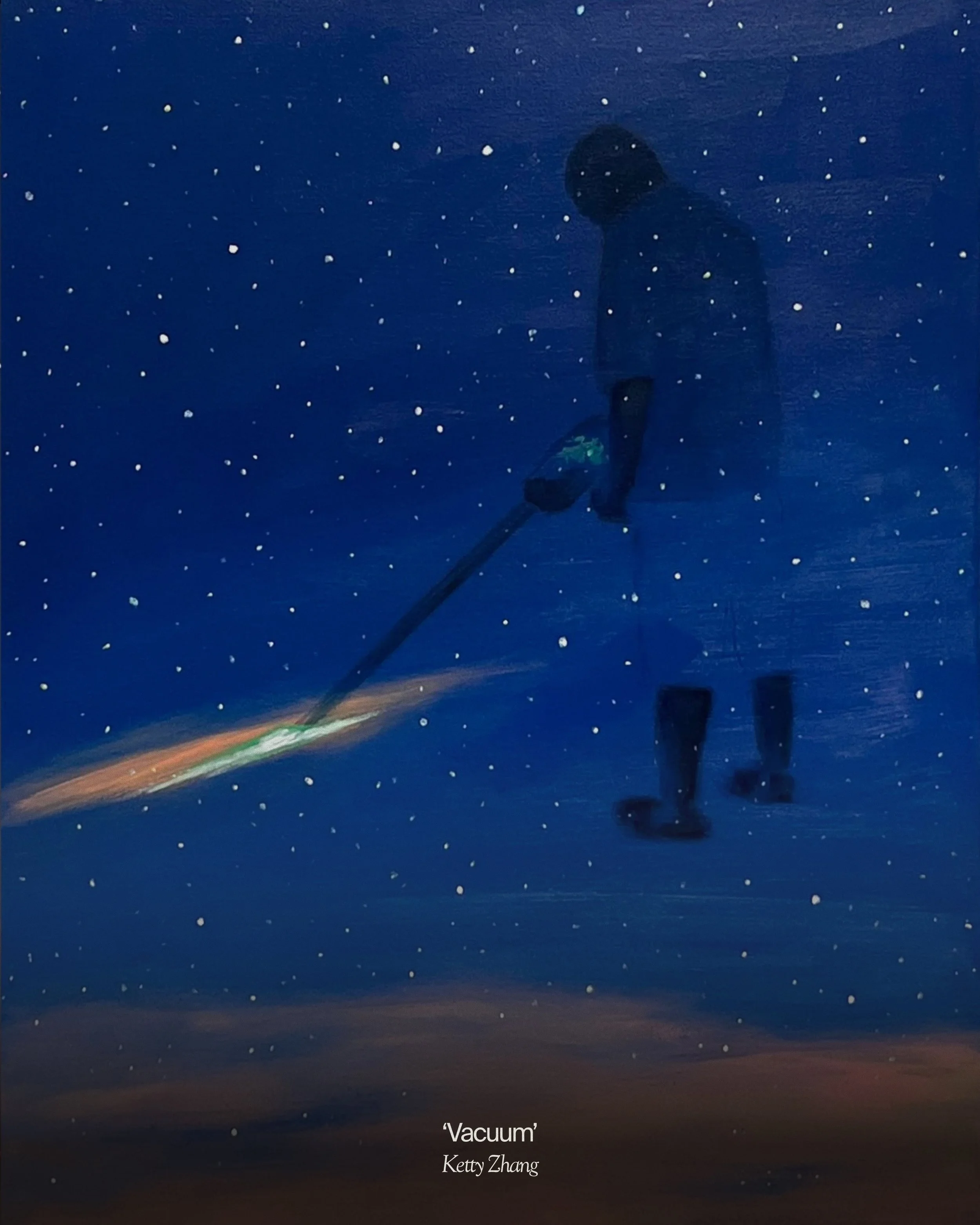
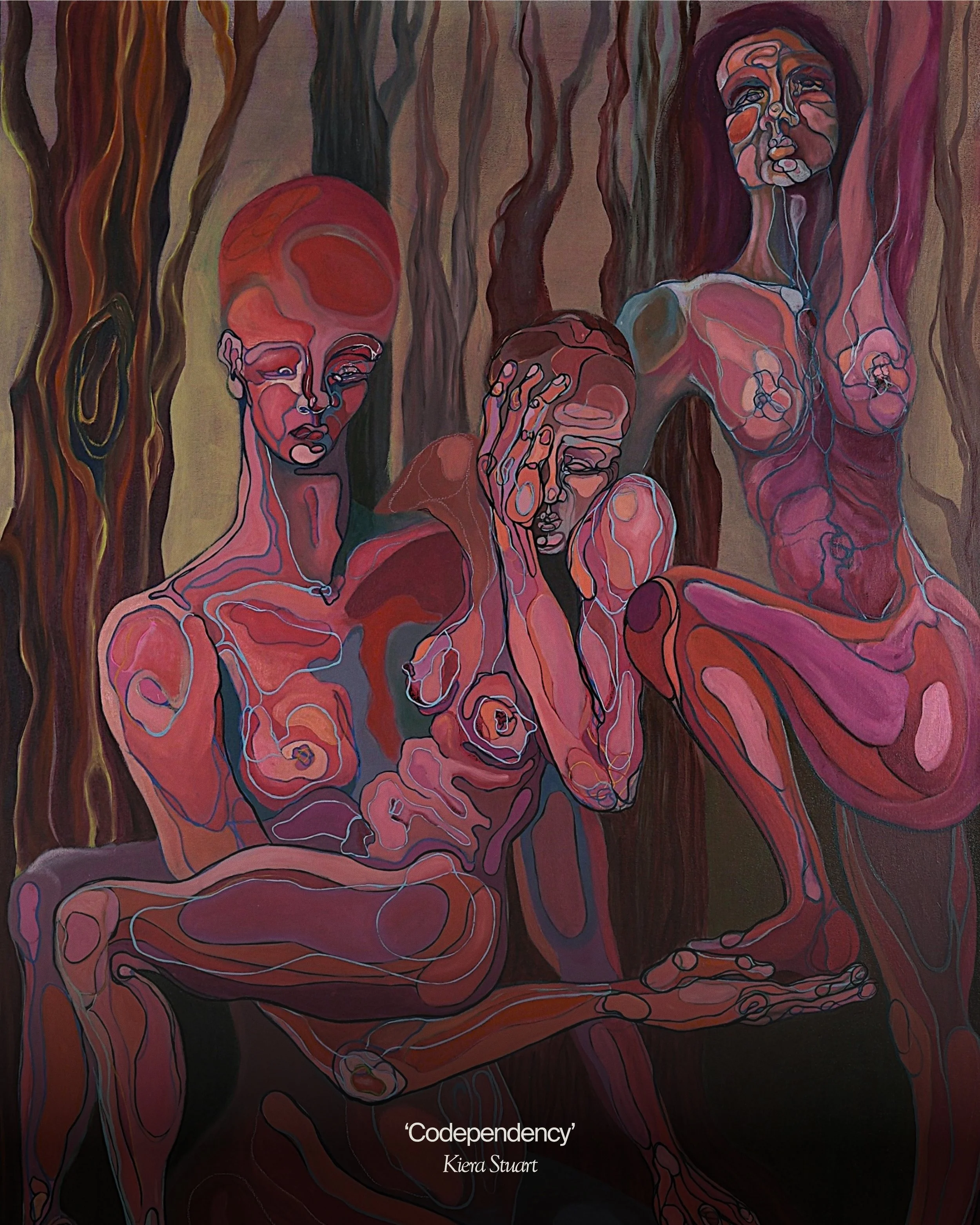
This weekend, whether you are carving a pumpkin or lighting a candle, we hope you find a moment to remember someone well.