
Some of the most famous works in the world were never meant for sale. They were made for a guest, a rival, a newborn, a country. Here are six of them, and what they can teach anyone thinking of giving art as a gift this year.
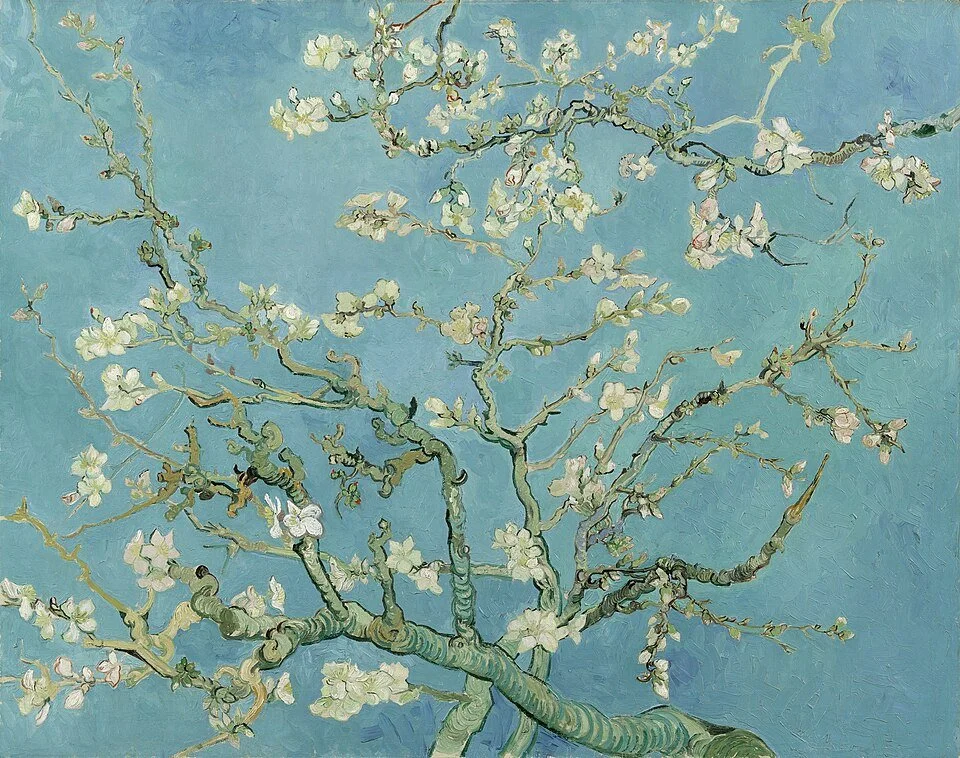
Vincent van Gogh, Almond Blossom, 1890. Van Gogh Museum, Amsterdam (Vincent van Gogh Foundation).
Every December, a great many people stand in a shop holding a scented candle and wondering whether it says enough. By February the candle has burnt down, and few people remember who it came from.
A work of art behaves differently. It stays on the wall, it gets asked about, and it carries the name of the person who chose it for as long as it hangs. That is a lot to ask of a present, which may be why giving art as a gift makes people nervous. Taste is personal, walls are finite and nobody wants to be the reason a painting lives in a cupboard.
Artists have been dealing with this problem for five hundred years, mostly by giving work to each other. Their record is mixed. One gift became the most recognisable painting on earth. Another was attacked with a knife by the man who received it. Between those two extremes sits most of what there is to know about giving art well, so this piece tells six of the stories and then turns them into a practical guide.
Why artists give their work away
For most of history a painter's work was either commissioned or sold, and both came with a contract. A gift sat outside that system, which made it useful. With no invoice attached, a drawing or a canvas could say things a sale never could: I admire you, I have missed you, look what I can do.
Gifts between artists also worked as a private exchange rate. A painter who sent a portrait expected something back, and what came back said a great deal about where the two of them stood. Some of the gifts below are love letters. One is closer to a business card. All of them were made with a single recipient in mind, and that turns out to be the part worth copying.
1. Raphael and Dürer: a drawing sent across the Alps
In 1515, Raphael was the most sought-after painter in Rome, at work on the Pope's private apartments. Albrecht Dürer was the most famous artist north of the Alps, known across Europe for his prints. As far as anyone knows the two men never met. They wrote to each other instead, and they sent presents.
According to Giorgio Vasari, Dürer went first. He sent Raphael a self-portrait painted in gouache on fine linen, so thin that the image could be seen from both sides. Raphael thought it marvellous and replied with several drawings of his own. Dürer's portrait was last recorded in Mantua in the seventeenth century and has since been lost. One of Raphael's drawings survives in the Albertina in Vienna: two male nudes in red chalk, studies for a fresco in the Vatican.
What makes the sheet remarkable is the note Dürer wrote on it. In his own hand he recorded the year, the name of the artist, how highly the Pope regarded him, and the fact that Raphael had sent the drawing to Nuremberg to show what his hand could do. It is the note of a man who knows exactly what he has been given and wants the next owner to know it too.
Raphael's present was a working drawing, the kind of thing an artist makes for himself, and Dürer treasured it for that reason. A gift between people who know each other's work can afford to be modest in size, provided it is the real thing.
2. Michelangelo: drawings made to be given
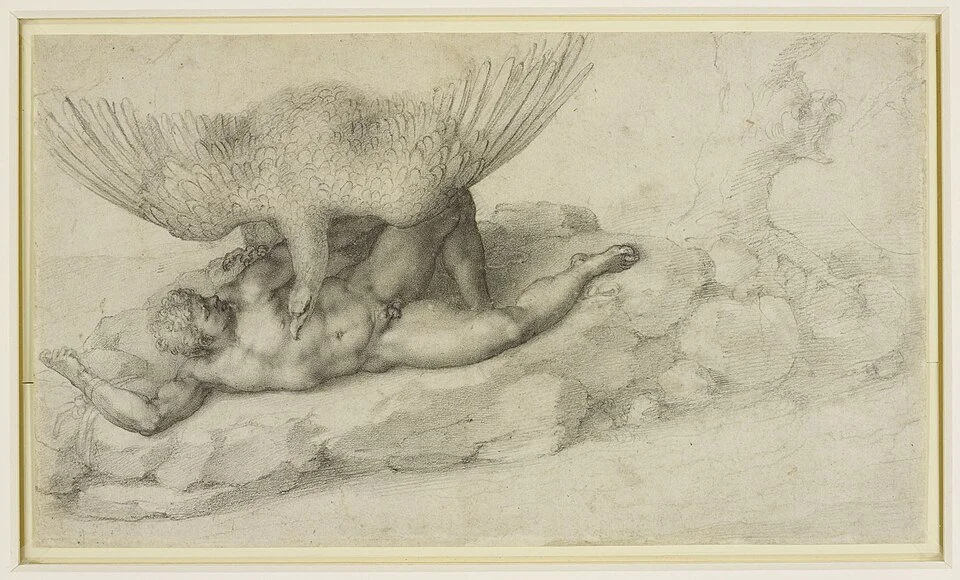
Michelangelo, The Punishment of Tityus, 1532. Royal Collection Trust.
In 1532, Michelangelo was 57 and the most celebrated artist alive. That year in Rome he met a young nobleman called Tommaso de' Cavalieri and was, by every account, overwhelmed. He wrote him poems. He also invented something close to a new kind of artwork for him.
Art historians call them presentation drawings: highly finished sheets in chalk, complete works in their own right, made to be handed to one person and looked at slowly. The first two, The Punishment of Tityus and The Rape of Ganymede, were probably New Year's gifts. On 1 January 1533, Cavalieri wrote back to say that he was spending two hours a day studying them. Few presents have been looked at so closely.
A third drawing, The Fall of Phaethon, followed that summer. One version, now in the British Museum, carries a note in Michelangelo's handwriting at the bottom of the sheet. If Cavalieri does not care for this sketch, it says, he will have another by the next evening. The greatest draughtsman in Europe was offering to exchange his own present.
The friendship lasted more than thirty years, and Cavalieri was at Michelangelo's bedside when he died in 1564. The Royal Collection at Windsor now holds three of the four drawings made for him. They were finished to a standard Michelangelo rarely reached in anything else on paper, because he knew precisely who would be looking.
3. Degas and Manet: the gift that came back
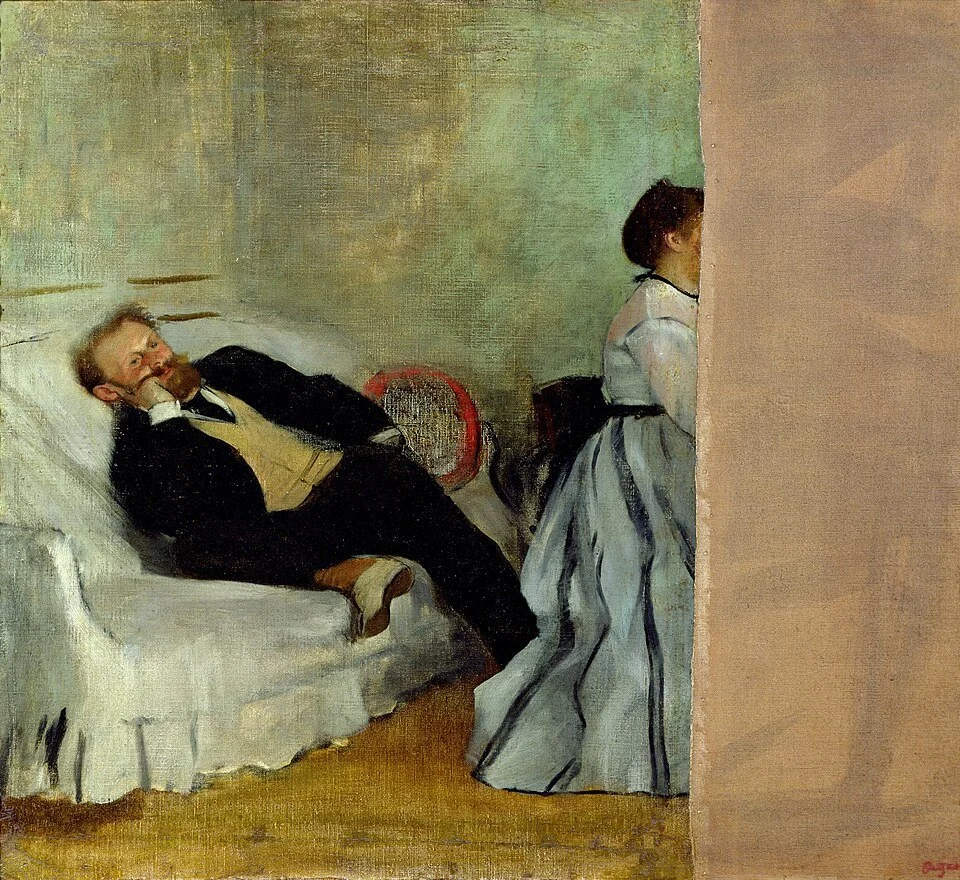
Edgar Degas, Monsieur and Madame Édouard Manet, 1868–69. Kitakyushu Municipal Museum of Art.
A gift of art can also go wrong, and the most instructive failure belongs to Edgar Degas.
Around 1868, Degas spent an evening at the home of Édouard Manet. Manet lay back on the sofa, one hand in his pocket, while his wife, Suzanne, played the piano. Degas had an extraordinary visual memory. He went home, painted the scene and presented the canvas to the couple.
On a later visit he found that the painting had been cut. A strip had been sliced from the right-hand side, straight through Suzanne's face. Manet, by most accounts, disliked the way his wife had been painted and solved the problem with a blade. Degas walked out with the canvas under his arm. He later described Manet as more vain than intelligent.
The painting stayed with Degas for the rest of his life. A strip of blank canvas was later attached where Suzanne had been, and Degas is said to have meant to repaint her. He never did. The picture was found in his studio after his death and now hangs in Kitakyushu, in Japan, still missing its pianist.
There is a coda. Years later, after Manet's death, one of his large paintings of the execution of the Emperor Maximilian was cut into pieces and sold off in fragments. The collector who tracked them down and patiently put the picture back together was Degas. Those fragments are now in the National Gallery in London.
Degas had painted what he saw. Manet wanted a picture he could live with. Anyone choosing art for another person is working for the second of those, and it helps to know that before you start.
4. Van Gogh: Sunflowers for a guest room
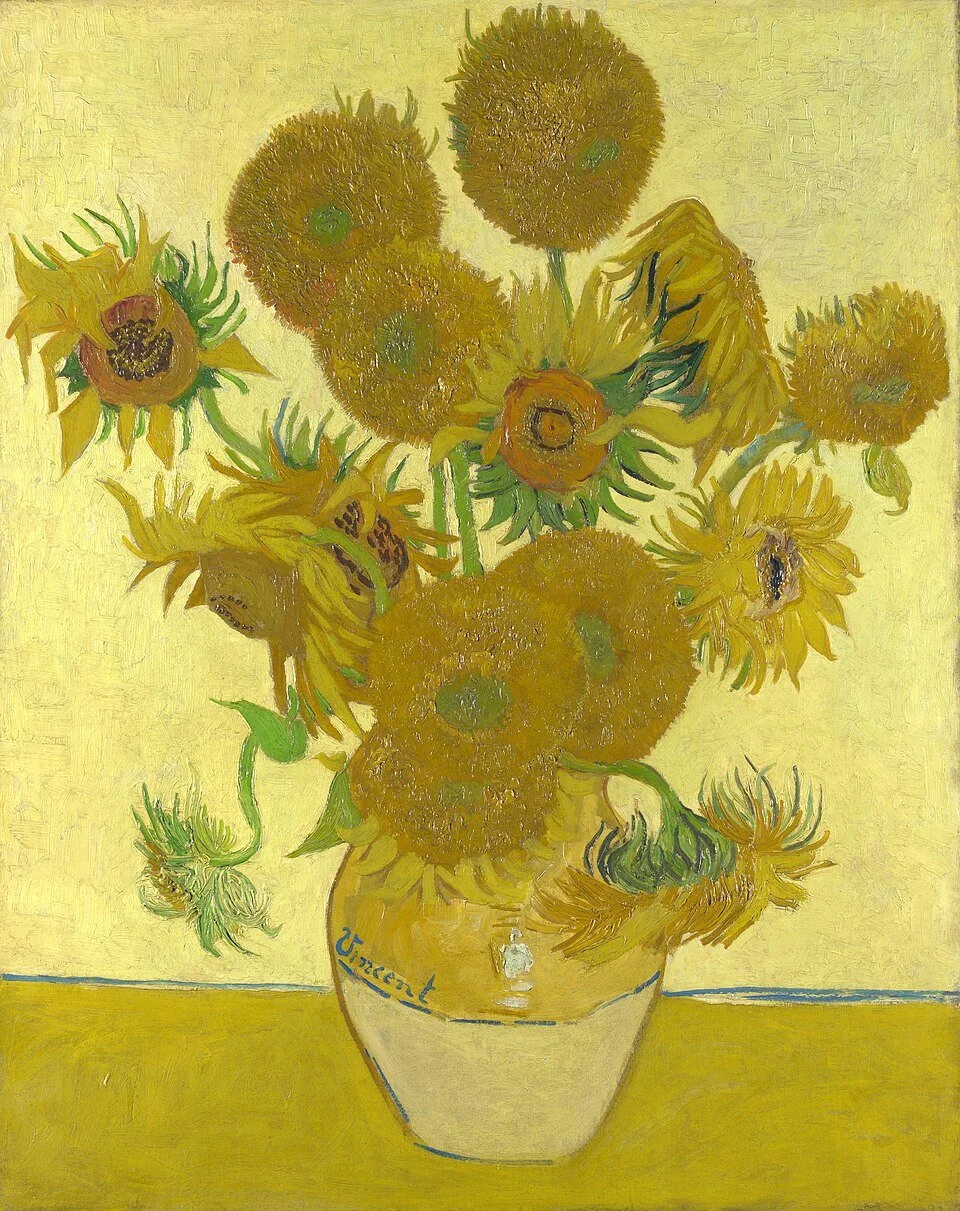
Vincent van Gogh, Sunflowers, 1888. The National Gallery, London.
In August 1888, Vincent van Gogh was getting a house ready for a visitor. He had rented four rooms in a yellow building on the Place Lamartine in Arles, and Paul Gauguin had at last agreed to come south and share it. Van Gogh wanted the guest room to be worthy of him, so he decided to fill it with flowers.
He painted four canvases of sunflowers in little more than a week, working fast because cut sunflowers wilt quickly. He told his brother Theo that he was painting “with the gusto of a Marseillais eating bouillabaisse”. The two canvases he judged best went up on the walls of Gauguin's bedroom. One hangs today in the Neue Pinakothek in Munich, the other in the National Gallery in London.
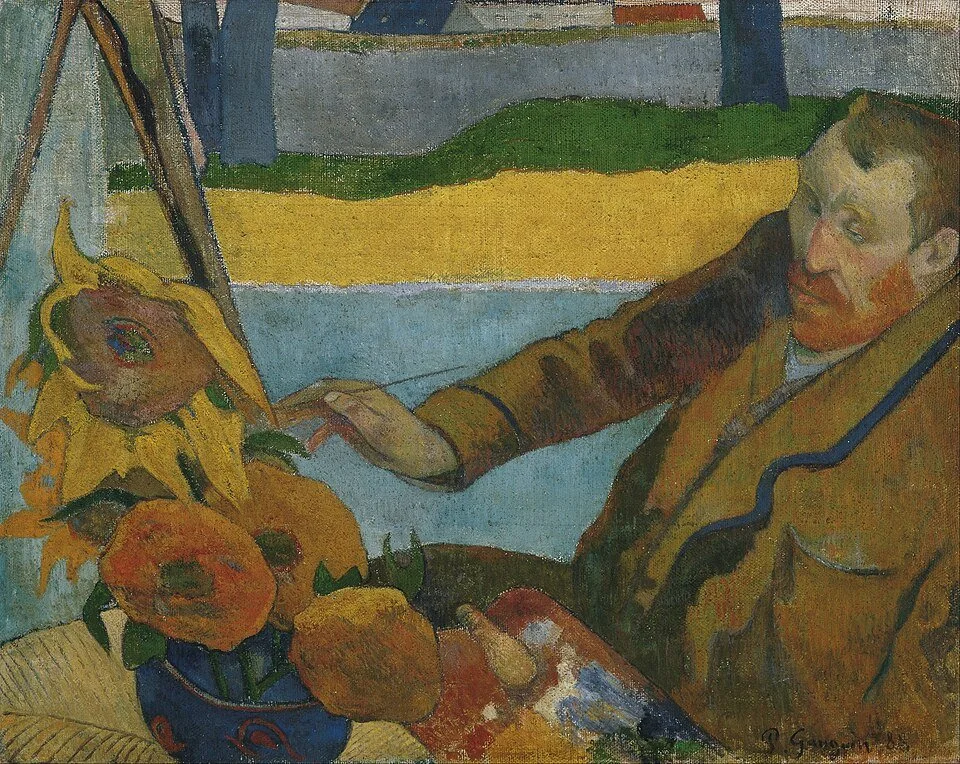
Paul Gauguin, Vincent van Gogh Painting Sunflowers, 1888. Van Gogh Museum, Amsterdam (Vincent van Gogh Foundation).
Gauguin arrived in October and stayed nine weeks. The two argued about almost everything, and the visit ended in the worst night of Van Gogh's life. Gauguin still remembered the room. That December he painted his host at the easel with a vase of sunflowers in front of him, and the following month he wrote to ask whether he could have one of the canvases for himself.
The Sunflowers are now so famous that it is easy to forget what they were for. They were decoration for a spare bedroom, chosen by someone who had thought hard about what his guest would see when he woke up.
5. Van Gogh again: blossom for a newborn
On 31 January 1890, Theo van Gogh wrote to his brother with news. His wife, Jo, had given birth to a son, and they had named him Vincent Willem. Theo added a wish that the boy might be “as determined and as courageous as you”.
Van Gogh was then living in Saint-Rémy-de-Provence, where the almond trees flower in February, weeks ahead of anything else. He painted their white branches against a clear blue sky, borrowing the flat background and the cropped composition from the Japanese prints he loved, and sent the canvas north to Paris. Theo and Jo hung it above the piano in their living room.
Almond Blossom is the painting at the top of this page. Vincent died that July, and Theo six months after him. Jo kept the collection together, and the baby the painting was made for grew up to found the Van Gogh Museum in Amsterdam, where it still hangs. Of everything Van Gogh made, this was the work his family held closest.
It is a useful reminder that a gift of art marks a date. A birth, a wedding, a first home: the work becomes the object that holds the memory, and it is looked at differently from anything bought for its own sake.
6. Monet: a gift to a country
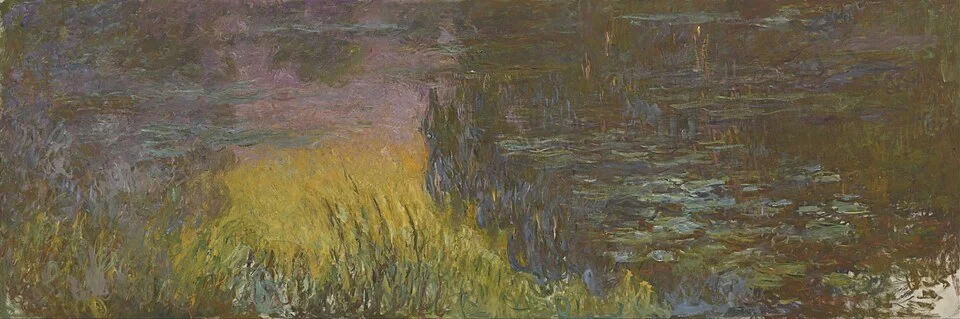
Claude Monet, The Water Lilies: Setting Sun, c. 1915–26. Musée de l'Orangerie, Paris.
On 12 November 1918, the day after the Armistice, Claude Monet wrote to his old friend Georges Clemenceau, who happened to be Prime Minister of France. He was close to finishing two large panels of his water-lily pond, he said, and wanted to offer them to the state. It was, he wrote, “the only way I have of taking part in the Victory”.
Clemenceau was a politician and knew an opening when he saw one. Over the following years he talked Monet up from two panels to an entire cycle, and found it a home in the Orangerie, a former greenhouse in the Tuileries Gardens. The deed of gift was signed on 12 April 1922.
Then Monet refused to hand the paintings over. He was in his eighties, his eyesight was failing, and he kept reworking the canvases. In January 1925 he wrote to Clemenceau to say he no longer had the strength and wished to withdraw. Clemenceau's replies were not gentle. Monet kept painting until shortly before his death in December 1926, and the panels left Giverny only afterwards.
The rooms opened in May 1927, with Clemenceau in attendance. Eight vast compositions hang in two oval galleries under natural light, exactly as Monet specified. It may be the largest present ever given by a painter, and it came with the longest delay.
What the six gifts have in common
Read together, the stories agree on a few points. The successful gifts were made or chosen for one person and one place: a bedroom in Arles, a living room in Paris, a pair of rooms in the Tuileries. Several were small. A sheet of red chalk crossed the Alps and has been kept for five centuries.
The givers also asked questions. Michelangelo offered to redraw his present if it failed to please. Van Gogh knew the room before he picked up a brush. Degas, who consulted nobody, got his canvas back with a piece missing. And every one of them came with a story the recipient could repeat. That may be the real advantage art has over the scented candle.
How to give art as a gift: a practical guide
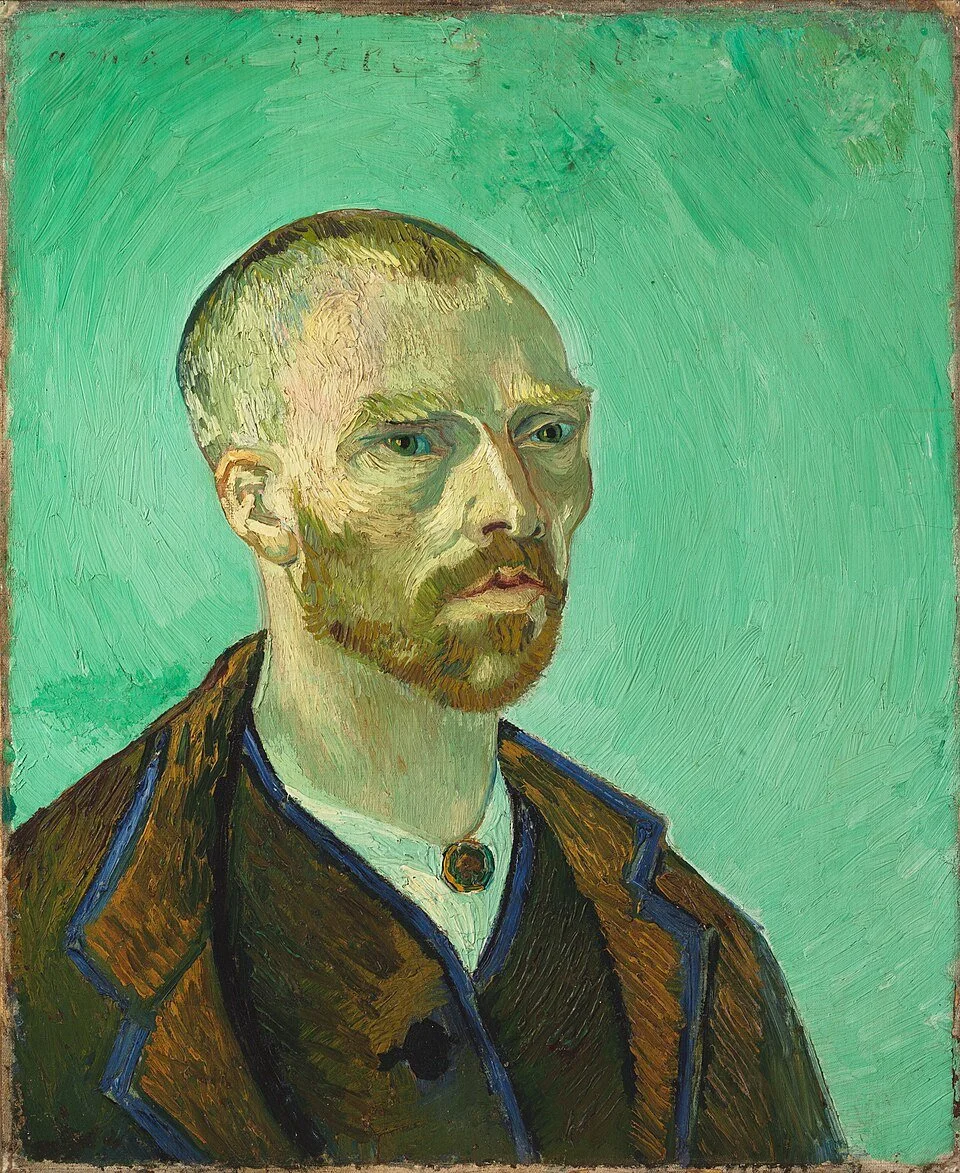
Vincent van Gogh, Self-Portrait Dedicated to Paul Gauguin, 1888. Harvard Art Museums/Fogg Museum.
You do not need to be Michelangelo to do this well. The method below works for a first original at any budget.
1. Begin with the person
Think about a place they miss, a colour they wear, the things already on their shelves. Look at what they have chosen to live with. A work that connects to something they already love is the one that gets hung. If you find yourself choosing what you would like on your own wall, stop and start again.
2. Picture the wall
Van Gogh had the advantage of knowing the room. Ask yourself where the work might go: a hallway, a kitchen, the space beside a bed. A specific spot in mind settles most questions of size and subject. Hallways and landings are forgiving. The wall above the sofa is the most contested territory in any home and is best left to its owner.
3. Choose a size you could carry
Works on paper and small canvases are easier to place, to frame and to move house with. Anything up to about 40 centimetres on its longest side will find a home almost anywhere. For someone who has never owned an original, a piece the size of a book is a generous and manageable first one.
4. Know what you are buying
An original painting or drawing exists once. A limited edition, such as a lithograph or a screenprint, exists in a fixed number of copies, usually signed and numbered by the artist. An open-edition print can be produced without limit. All three can make a good present, and the price should reflect the difference. Our earlier piece, Not Every Original Is One of a Kind, explains the terms in detail.
5. Ask how it arrives
Some works come framed and ready to hang. Works on paper usually need a frame, and a good framer may need two or three weeks in December. The listing will tell you what to expect, and so will the artist. If the work arrives unframed, consider including the framing in the gift. An unframed drawing in a drawer is a debt.
6. Set a budget and keep to it
There are original works by living artists at almost every price. Small drawings and studies begin at around $100. Between $200 and $500 there is a wide choice of works on paper and small paintings. The amount matters less than people fear: Raphael sent a working sketch, and it is still in a museum.
7. Order with the calendar open
An original travels from the artist's studio, often across a border. Check the delivery estimate on the listing before you set your heart on a date, allow extra days in December, and remember that customs can add both time and a charge. If the work cannot arrive in time, give a printed image of it with a note, and let the original follow in January. Monet's gift arrived nine years late and nobody has complained since.
8. Write the note
Add a few lines about who made the work and why you thought of them when you saw it. Dürer wrote his directly on the drawing. Theo's family could still explain, a century on, why Almond Blossom had been painted. The note is the part of the gift that lasts longest, and it costs nothing.
9. When in doubt, let them choose
Michelangelo's offer to redraw his gift is a sound principle. If you are unsure, narrow the field to two or three works and let the recipient pick, or give them the search itself: an evening spent choosing together is a better present than a guess.
For artists: how to make your work easy to give
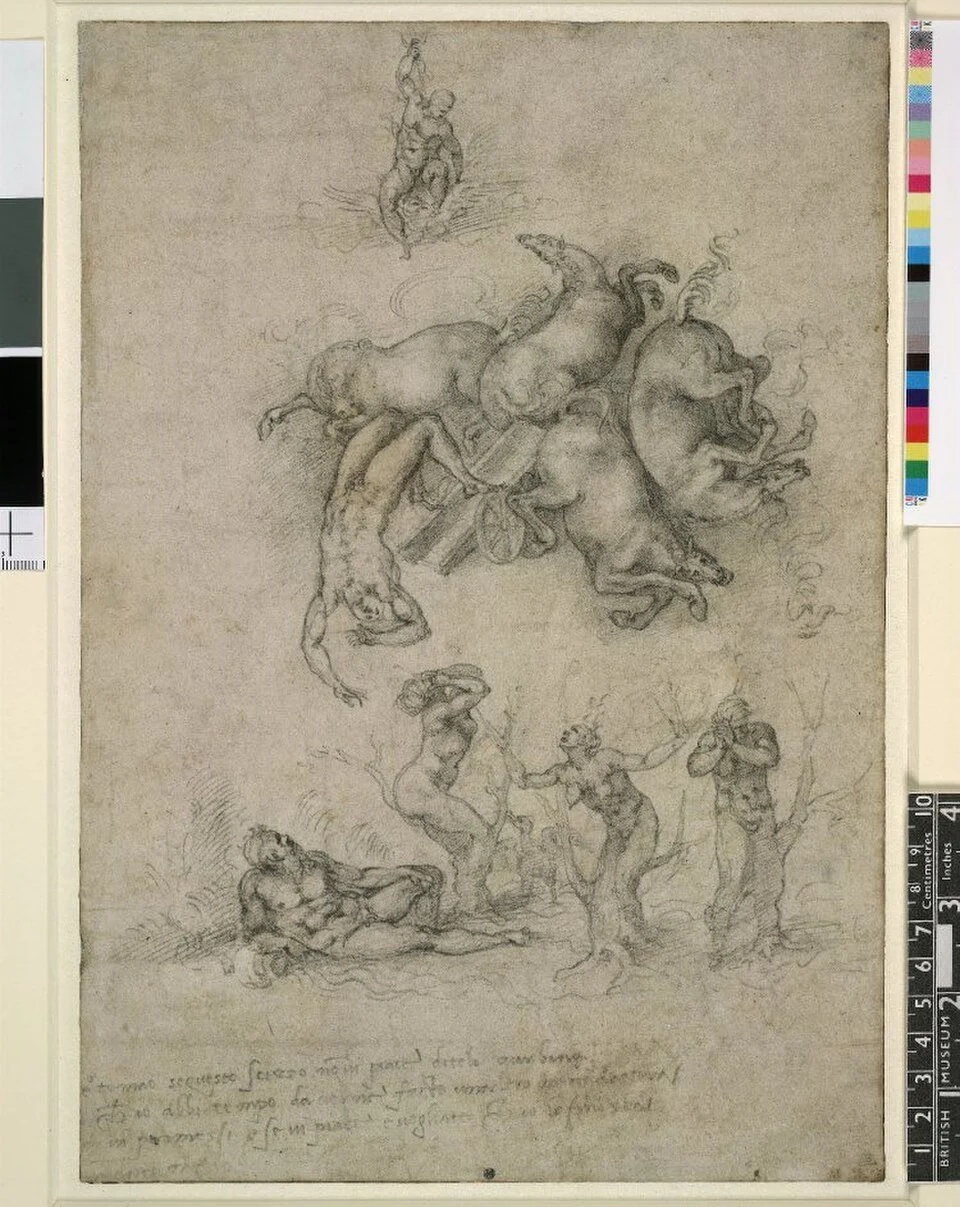
Michelangelo, The Fall of Phaeton, 1533. The British Museum, London.
A good share of the people looking at your work in December are buying for someone else, and they read a listing differently. They look first at the delivery estimate, so make sure it reflects your real making and packing time. They want to know whether the work arrives framed, how it should be hung and how large it is in terms they can picture.
They are also looking for something to say. A sentence or two about where the work began gives a buyer the words for the card. If you are happy to include a handwritten note or to sign the back with a dedication, say so in the description. Michelangelo did.
Frequently asked questions
Is art a good gift?
Yes, when it is chosen for the person and the space they live in. Unlike most presents, a work of art is kept and seen every day. The safest choices are small, connected to something the recipient already loves, and accompanied by a note about the artist.
How much should I spend on art as a gift?
There is no rule. Original drawings and small works by living artists begin at around $100, and many people spend between $200 and $500 on a first gift. A modest original chosen carefully will mean more than an expensive one chosen in a hurry.
What size of artwork is best for a gift?
Smaller is safer. A work up to about 40 centimetres on its longest side can hang in a hallway, a bedroom or a kitchen, or stand on a shelf, and is easy to frame and to move.
Should I frame art before giving it?
If the work is on paper, framing it first means it can go straight on the wall. If you are unsure of the recipient's taste in frames, give the work unframed and offer to pay for the framing.
What was Van Gogh's Sunflowers painted for?
Van Gogh painted his Sunflowers in Arles in August 1888 to decorate the bedroom of his friend Paul Gauguin, who was coming to stay. The version now in the National Gallery in London was one of two that hung in Gauguin's room.