
The Anatomy of an Art Price
Two paintings, same size, same medium. One is $800, one is $80,000. What you're paying for is almost never the paint.
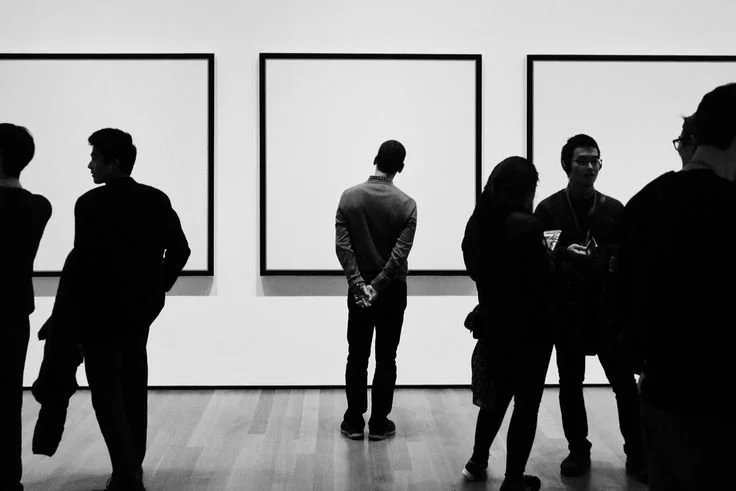
Stand in front of two abstract canvases of roughly the same size and honestly similar quality, at least to your eye, and the prices can differ by a factor of a hundred. Nothing visible in the frame explains it. This is the moment the art market loses most people, because it looks arbitrary, and arbitrary feels like a trap. It isn't arbitrary. It's just that most of what you're paying for sits outside the picture.
The price is a biography
An artwork's price is less a measure of the object than a snapshot of the artist's momentum. Where have they exhibited, and at what kind of institution? Which collectors already own their work? Has a serious gallery committed to representing them, and for how long? How much work do they release, and how fast does it sell? None of this is visible on the canvas, and all of it moves the number.
This is why two similar paintings can sit a hundredfold apart. One artist is early: a growing practice, a first wave of collectors, prices set to welcome people in. The other has a decade of shows, a waiting list, and a market with its own gravity. You aren't paying for better paint. You're paying for a position in a story that many people are now invested in continuing.
The parts you can see
Inside that larger story, the object itself still sets the baseline, and the logic is refreshingly ordinary. Scale costs money: a large canvas takes more time, more material, and more wall to sell to. Medium matters: oil tends to price above acrylic, acrylic above works on paper, and anything unusually labor-intensive, encaustic, intricate collage, hand-stitched textile, carries its hours in its price. An original prices above an edition, and a small edition above a large one, because scarcity is doing quiet work in every corner of this market.
Time is the ingredient people underestimate most. A painting that took four hundred hours does not cost four hundred times an afternoon sketch, but the hours are in there, along with the years it took to make those hours count for something. When a price seems high for what looks simple, you're usually looking at the last page of a very long book.
The layer you never see
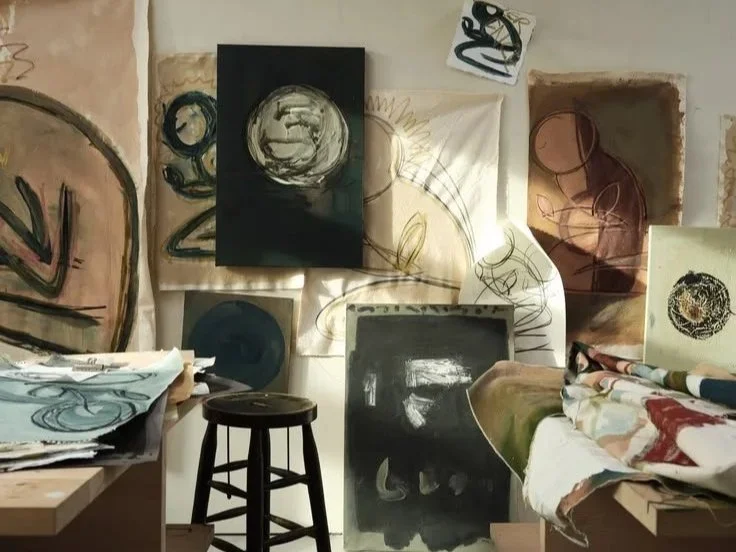
Here's the part the wall label doesn't mention: in the traditional gallery system, roughly half of the price typically goes to the gallery as commission. That split isn't a scandal, galleries carry real costs and do real work for their artists, but it means the number on the wall reflects an entire building's overhead, not just the artist's.
It also explains why the same caliber of work can cost meaningfully less when you buy it directly from the artist. Platforms built on direct connection remove that layer, so the price you see tracks the work and the artist's actual market, not the rent on a viewing room. It's worth knowing simply because it changes what a price means depending on where you're standing.
What this means for you
If prices track momentum, then the imbalance runs both ways, and this is the genuinely exciting part. Somewhere right now is an $800 painting by an artist whose momentum hasn't been priced in yet. The collectors with the walls you envy mostly didn't outspend everyone. They looked earlier, trusted what kept stopping them, and bought before the story was obvious.
You don't need to time the market to do this, and you shouldn't try. Buy the work that persists in you, at a price that feels honest for where the artist is. If the artist's story grows, your early chapter grows with it. And if it doesn't, you own something you love, which was the point all along.
The best answer to "why does art cost what it costs" turns out to be an invitation: learn to read the signals around a work, not just the work. Then go find the one that's still early.