
The Art of Being Read: Tarot, Auras, and Why We Want Pictures to Tell Us Who We Are
Tarot, auras, and the oldest reason we look at pictures.
Tarot is everywhere again this year, on museum walls, on runways, and in a major show at the Morgan Library that people have been queuing for all summer. It shouldn't surprise anyone who knows artists. They've been reaching for the cards for six centuries, and not really for fortune-telling. Tarot is a deck of pictures built to be reinterpreted, a portable language of images whose real subject is the person holding them.
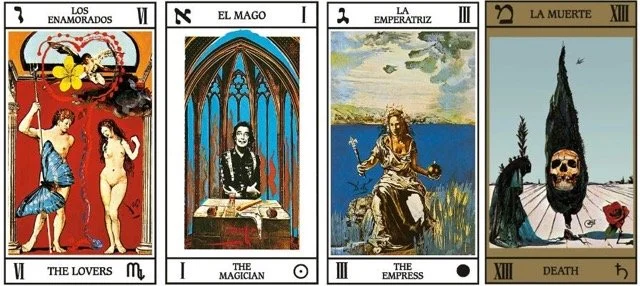
The lineage is long and distinguished. Pamela Colman Smith designed the deck the world still uses in 1909, and spent decades uncredited beneath the man who commissioned it. Leonora Carrington painted her own haunted Major Arcana in the 1950s. Dalí spent years on a gilded deck of his own. What drew them is what draws any artist: images that hold more than one meaning at once and don't wear out.
The picture that reads you
A tarot reading works in a way that's easy to miss. The cards don't know anything about you. A spread puts an image in front of you and lets your own mind rush to meet it: the Tower means what your week made it mean, the Star means what you needed it to. The card is a mirror with a picture on it. That is also a fairly precise description of what happens when you stand in front of a painting you love. The work stays still. Everything that moves is you.
Auras, or the same wish in colour
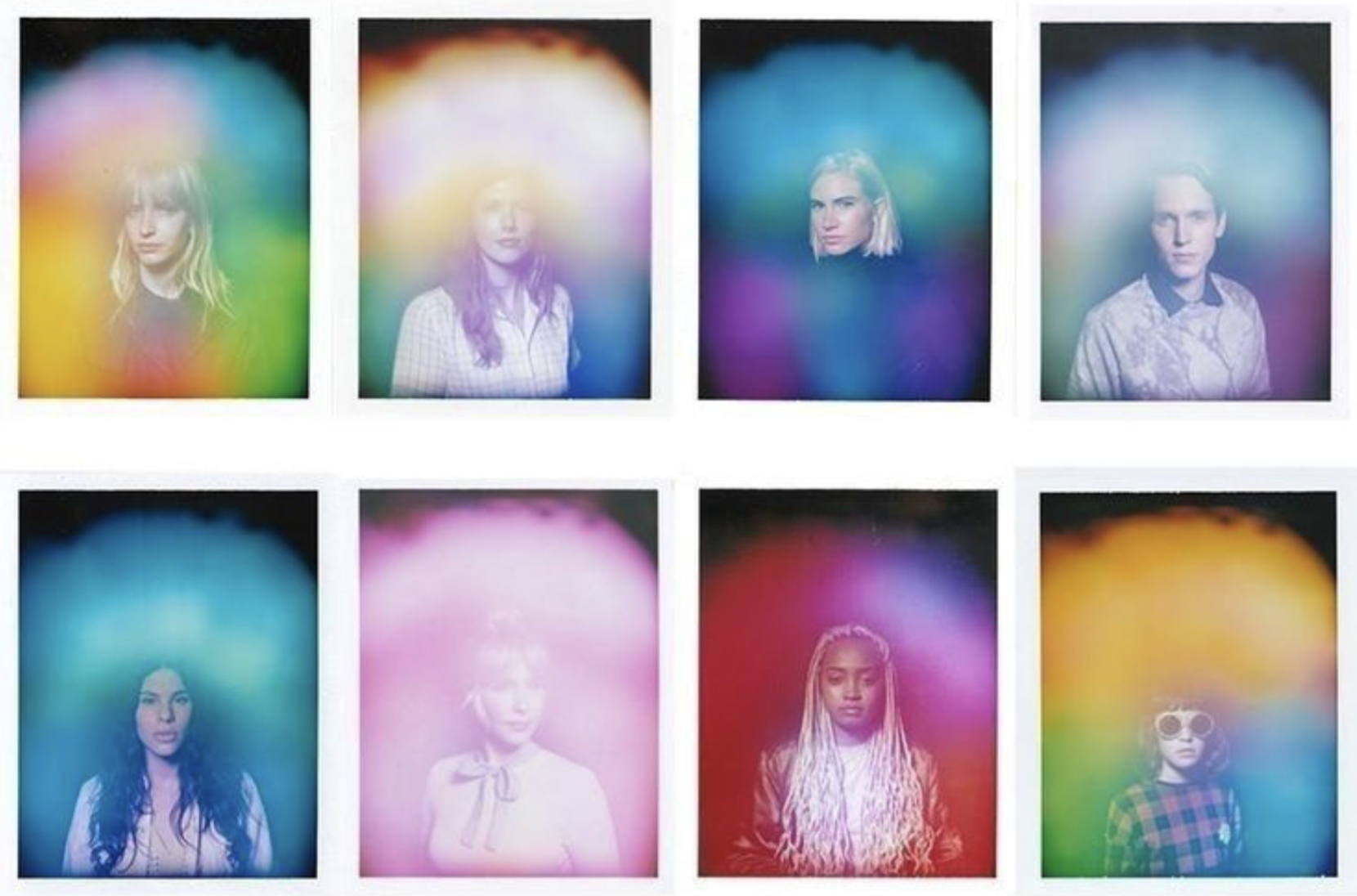
Aura photography arrived in the 1970s with a camera that claimed to capture the energy around a body as a glow of colour, and it has never gone away, because it answers the same wish tarot does: show me myself, in a form I can hold. The colours are the whole appeal. People don't want to be told they're anxious or generous. They want to see themselves as a violet, a burnt orange, a field of blue, and then find out what it means. It's the pleasure of being read through colour, which is also, not by accident, the pleasure of collecting art.
Your taste is a reading too
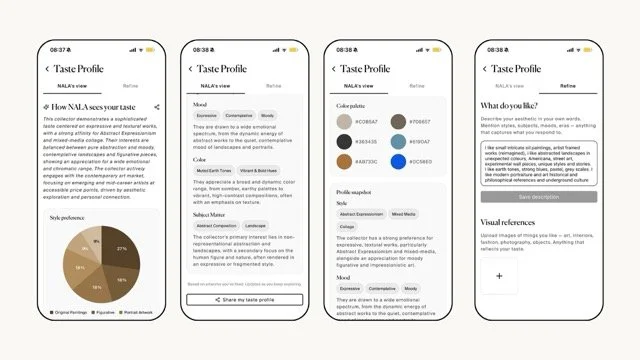
Every one of these practices runs on the same engine: you respond to images, and the pattern of your responses says something true about you that you couldn't have said yourself. For art lovers on the NALA app, this is exactly what the Taste Profile is. Not a horoscope, not a guess, a reading built from the images you actually stopped for, every swipe and save resolved into your moods, your subjects, and your colour palette, the hues you keep returning to whether you meant to or not. Tarot readers would call that your spread. Aura photographers would call it your glow. We call it your taste, and unlike the cards, it gets more accurate every time you look.
Get yours read, this Thursday in London
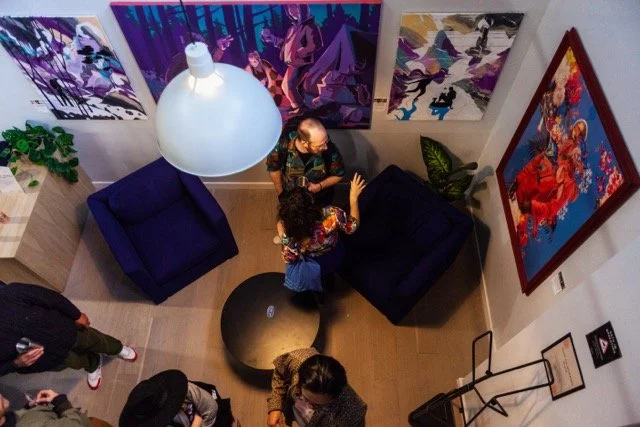
We're taking the idea offline. This Thursday, September 3rd, from 6 to 9pm, NALA has its own room at 10,000 HOURS, the exhibition at Laundry Studios in London E8, and inside it we're offering free aura portraits, read as art taste. Sit for a photograph, take home a printed portrait, and leave with a card showing all nine aura colours and what each one means. Then scan the code on the back and go deeper: your dominant colour, read in full, as a collector's taste or as an artist's working temperament, depending on which side of the canvas you live on. Arrive early to get a one-to-one reading with the photographer, too.
It's free, it's quick, and the portrait is lovely to keep. Grab your ticket at https://10000.eventbrite.co.uk
And if you already have an aura portrait of your own
Stay tuned. After the event we'll publish the full readings for all nine colours, what each one says about how you collect, and what each one says about how you make. If your glow has been sitting in a drawer since some other party, it's about to mean even more.