
When a painting costs more than a sofa, it is fair to ask why. From a famous Victorian court case to the pricing methods artists use today, here is what sits behind the number on the label.
Two Days, or a Lifetime
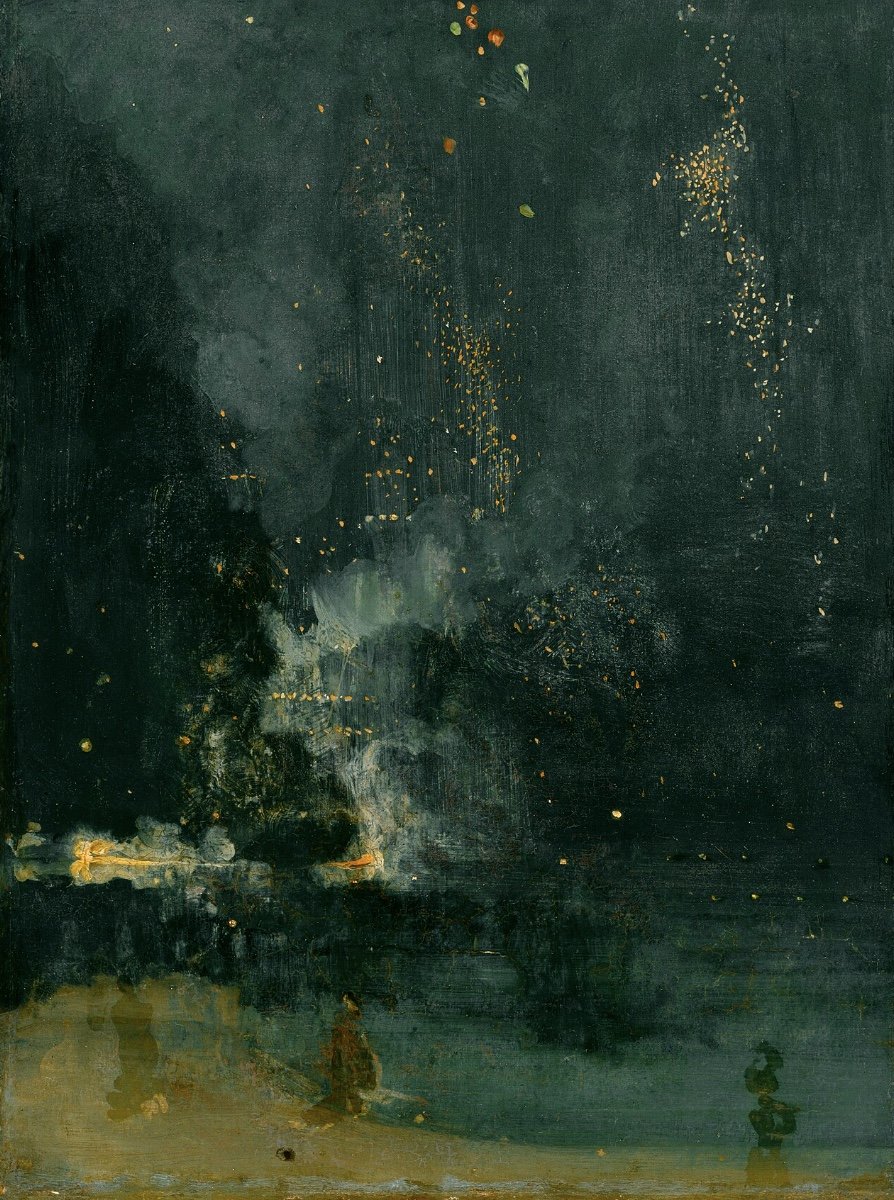
In 1877, James McNeill Whistler exhibited Nocturne in Black and Gold: The Falling Rocket at the newly opened Grosvenor Gallery in London. The painting shows fireworks drifting down through the night over Cremorne Gardens, by the Thames. Its price was 200 guineas.
John Ruskin, the most influential critic in Britain at the time, was not impressed. He wrote that he had never expected to hear an artist ask “two hundred guineas for flinging a pot of paint in the public’s face.” Whistler sued him for libel, and in November 1878 the case reached court.

Under cross-examination, Whistler was asked whether he really expected such a sum for what amounted to two days’ work. His answer became one of the most quoted moments in art history: he was not charging for two days, but for the knowledge of a lifetime.
The jury found in Whistler’s favour, yet awarded him damages of a single farthing, and the legal costs left him bankrupt the following year. Almost 150 years later, the question at the centre of the trial is one many buyers still ask, even if only to themselves: what exactly am I paying for?
The Costs You Can See
Part of an artwork’s value is easy to picture. Artists buy their own materials: canvas or linen, stretcher bars, paper, brushes and paint, with professional-grade pigments costing considerably more than student ranges. Larger works need more of everything, along with studio space to make and store them and careful packing to send them safely to their new home.
Then there is time. A single painting can take days, weeks or months, often built up in layers that need to dry between sessions. Many artists also make sketches and studies that never leave the studio.
These visible costs explain part of a price. But if they were the whole story, a canvas would cost little more than its materials and the hours on the clock.
The Costs You Can’t See
Whistler’s answer points to the larger part of the price: everything that happened before the work was made.
Behind every finished piece are years of learning, whether at art school, in a studio apprenticeship or through self-directed practice. There are the experiments that failed, the canvases painted over and the techniques refined through repetition. Above all, there is the slow development of a recognisable visual language, often the hardest-won thing an artist owns.
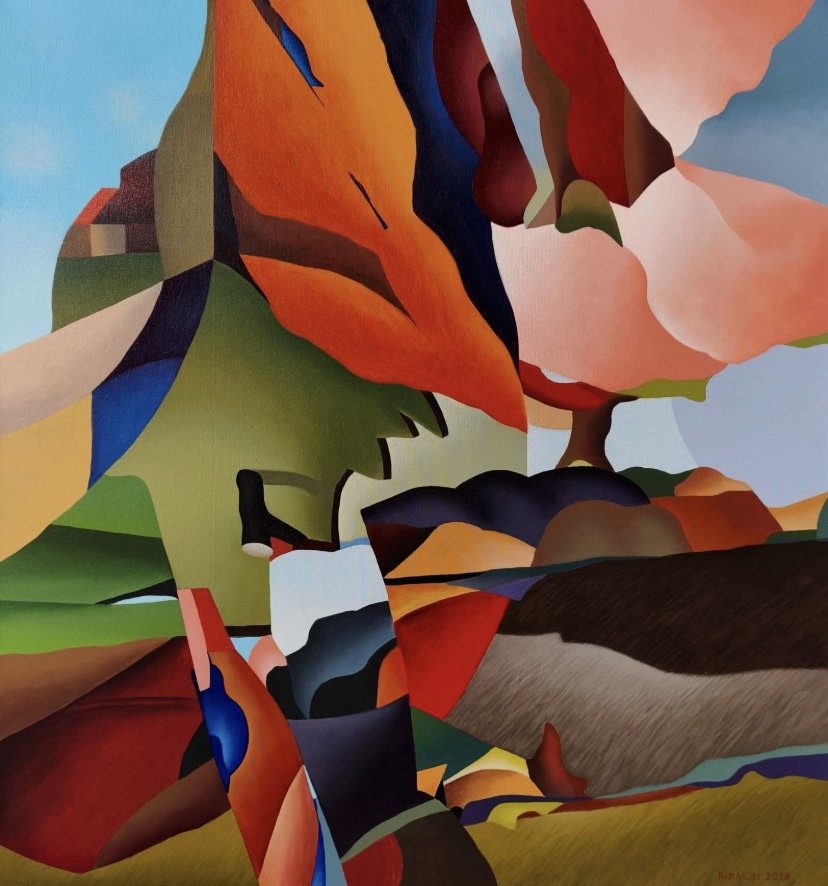
Rinaldi Syam, Fragments of Becoming. Acrylic on canvas, 140 × 150 cm. Available on NALA.
When a painting looks effortless, it is usually because the effort happened long before. A confident brushstroke laid down in seconds may rest on thousands of hours of practice. In that sense, buying an original work is less like buying an object and more like acquiring a concentrated piece of an artist’s life.
Why Two Paintings of the Same Size Can Cost Very Different Amounts
Size does matter. Many artists use simple formulas to keep their prices consistent: multiplying a work’s height by its width and a set rate per square inch or centimetre, or adding the two dimensions together and multiplying by a rate. These methods make sure a large canvas costs more than a small one by the same artist, and that prices make sense across a whole body of work.
The rate itself, however, depends on the artist. The main factors include:
Career stage. Emerging artists usually begin with more accessible prices and raise them as their careers develop.
Exhibition history. Solo and group shows, residencies, awards and press coverage all build an artist’s reputation.
Demand and sales record. An artist whose works sell consistently, or who has a waiting list of collectors, can command higher prices.
Medium and complexity. An intricate, many-layered painting and a quick ink study of the same size involve very different processes.
This is why a 60 × 80 cm painting by one artist might cost a few hundred dollars, while a work of the same dimensions by another costs several thousand. Neither price is necessarily right or wrong. Each reflects where that artist is in their journey.
Original, Edition or Print?
It also matters exactly what you are buying.
An original is a one-of-a-kind work made by the artist’s own hand. There is only one, and once it is sold, it is gone.
A limited edition is produced in a fixed number of copies, usually numbered and signed by the artist. Printmaking techniques such as etching, screen printing and lithography are art forms in their own right, and the smaller the edition, the more each impression tends to be valued.
An open-edition print is a reproduction that can be printed in unlimited quantities. It can be a lovely, affordable way to live with an image, but it is not the same as owning the original.

When comparing prices, make sure you are comparing like with like. An original painting and a poster of the same image are entirely different objects.
Where Your Money Goes
In the traditional gallery model, a commercial gallery often takes around 50% of the sale price as commission, though agreements vary. That commission supports the gallery’s space, staff, exhibitions and promotion, and for many artists representation is invaluable. It does mean, however, that an artist may receive only half of what a collector pays.
Buying directly changes that balance. NALA charges artists no fees and no sales commission: when a work sells, the artist receives 100% of their retail price. More of what you pay reaches the person who made the work.
How to Tell If a Price Feels Fair
You do not need to be an expert to buy with confidence. A few simple questions help:
Is the price consistent with the artist’s other works of a similar size and medium?
Does the artist have an exhibition history, or a growing body of work and collectors?
Is it an original, a limited edition or an open-edition print?
Does it come with a certificate of authenticity? Works sold on NALA include one.
Most importantly: does it move you, and will you still want to look at it in ten years’ time?
The Value Beyond the Price
Whistler paid dearly for winning his case, but history settled the argument in his favour. Today The Falling Rocket belongs to the Detroit Institute of Arts, and the painting Ruskin dismissed is widely regarded as a landmark of modern art.
Not every artwork will follow that path, and it does not need to. The real value of an original piece lies in the years of looking, thinking and making that it carries, and in the years it will spend with you: changing with the light in your home, revealing new details and holding its own story alongside yours.
Explore original works by independent artists from around the world on NALA, each one priced by the artist who made it.